
The GOAT Problem – “Comparison and Anxiety”
As we continue exploring The GOAT Problem, this week’s focus turns to the anxiety that comparison creates. When our sense of worth becomes tied to how we measure up against others, anxiety takes root. Scripture reveals that comparison doesn’t just distort how we see others—it reshapes how we see ourselves, God, and our own value. How can we avoid the anxiety of comparison?
1. The Anxiety of Comparison Assumes “Blessed is Better” (Job 4:1,7-8)
- Job’s friend Eliphaz looked at Job’s suffering and concluded that Job’s pain must be proof of his failure, sin or guilt – judging simply that “you would still be blessed if you hadn’t failed.” This fallacy assumes “blessed is better” and that those who are “better off” must be “better than.”
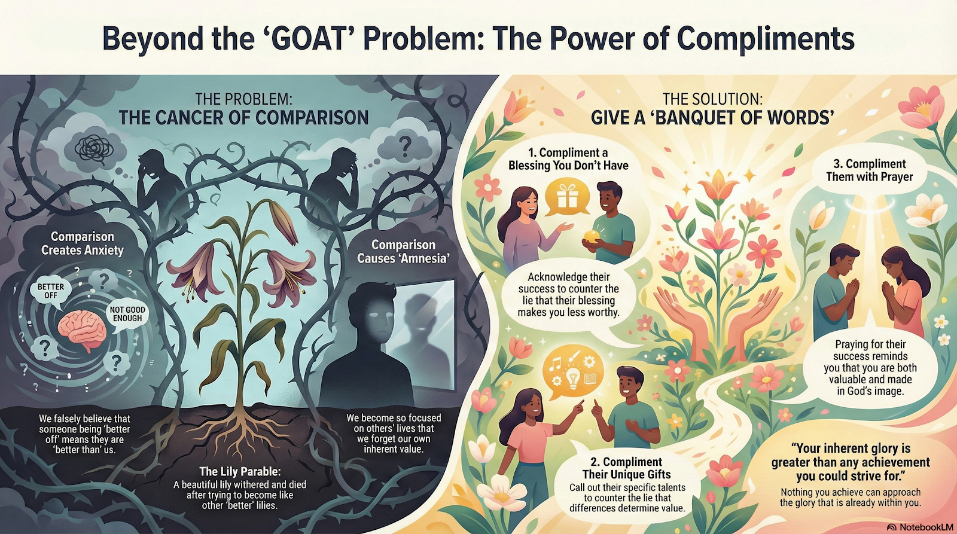
- Our anxiety grows when we lose sight of God’s care, purpose, and work in our own lives as we compare ourselves with those we see as more “blessed.” Miroslav Volf called this phenomenon “Comparison Amnesia” – we forget who we are when we try to be who others appear to be.
2. The Anxiety of Comparison Forgets Who We Are (Matthew 6:28-30)
- Jesus confronts “Comparison Amnesia” directly in the Sermon on the Mount. He reminds his listeners that their status and worth don’t come from comparison, but in recognizing how much God loves them and cares for them – much, much more than even the best-dressed lilies.
- As Kierkegard’s parable of the lily and the bird illustrates, to overcome the anxiety of comparison we must stay rooted in the identity God has given us and thrive where God has planted us. When we chase someone else’s life, gifting, or success, we risk losing the unique life God is growing in us.
3. The Power of a Compliment (Luke 14:12-14)
- In Luke 14, Jesus suggests a "banquet" approach to life—treating those who are distant from or competitive with us with the generous dignity usually reserved for those closest to us. In our daily practice, this principle is best applied as a “banquet of words”—the intentional practice of sincere compliments. Here are three types to try:
- Compliment a Blessing You Don’t Have – by verbally recognizing the gifts and talents of others, I expose the lie that I’m unworthy because your “blessings” make you “better than” me.
- Compliment What You See as Unique – by calling out the things that are special about you, I confront the lie that “sameness” is the goal – that I have to be like you to be valuable.
- Compliment Them With Prayer – praying for those we’re prone to compare ourselves with reshapes our heart and reminds us that each of us bears the glorious Image of God.
- “Every human being, each in their own way, has the same glory – and this glory is incomparably greater than the glory of any distinction they could struggle themselves into.” Miroslav Volk
ADDITIONAL SCRIPTURE
These passages may provide additional insights related to the subject of this week’s message. All verses are NLT unless otherwise noted.
Exodus 20:17; Psalm 118:5-9; Romans 12:3-5; 2 Corinthians 10:12; Galatians 1:10; Philippians 2 :3
Video of the Week: The Sermon on the Mount by the Bible Project
QUESTIONS FOR REFLECTION AND DISCUSSION
- When have you felt pressure in your life to measure up to someone else? What effect did that pressure have on you?
- As the message pointed out, healthy ambition isn’t a bad thing in itself. In your own words, how would you describe the difference between healthy ambition and the “cancer of comparison”?
- Reread Job 4:7-8. From what you know of the book of Job, how does Job’s story challenge the lie that “blessed is better” – i.e., that pain and suffering indicate failure or guilt?
- What would you say are some warning signs that you might be allowing comparison with others to “uproot” you from your own calling and identity?
- Who or what might be a “naughty bird” in your life right now that’s trying “uproot” you from who you’re called to be (e.g., social media, family, etc.)?
- One method for overcoming comparison anxiety is to celebrate others with “a banquet of words.” In your view, what’s the difference between “a banquet of words” and mere flattery?
Looking for a group to explore with?
Find your people.
